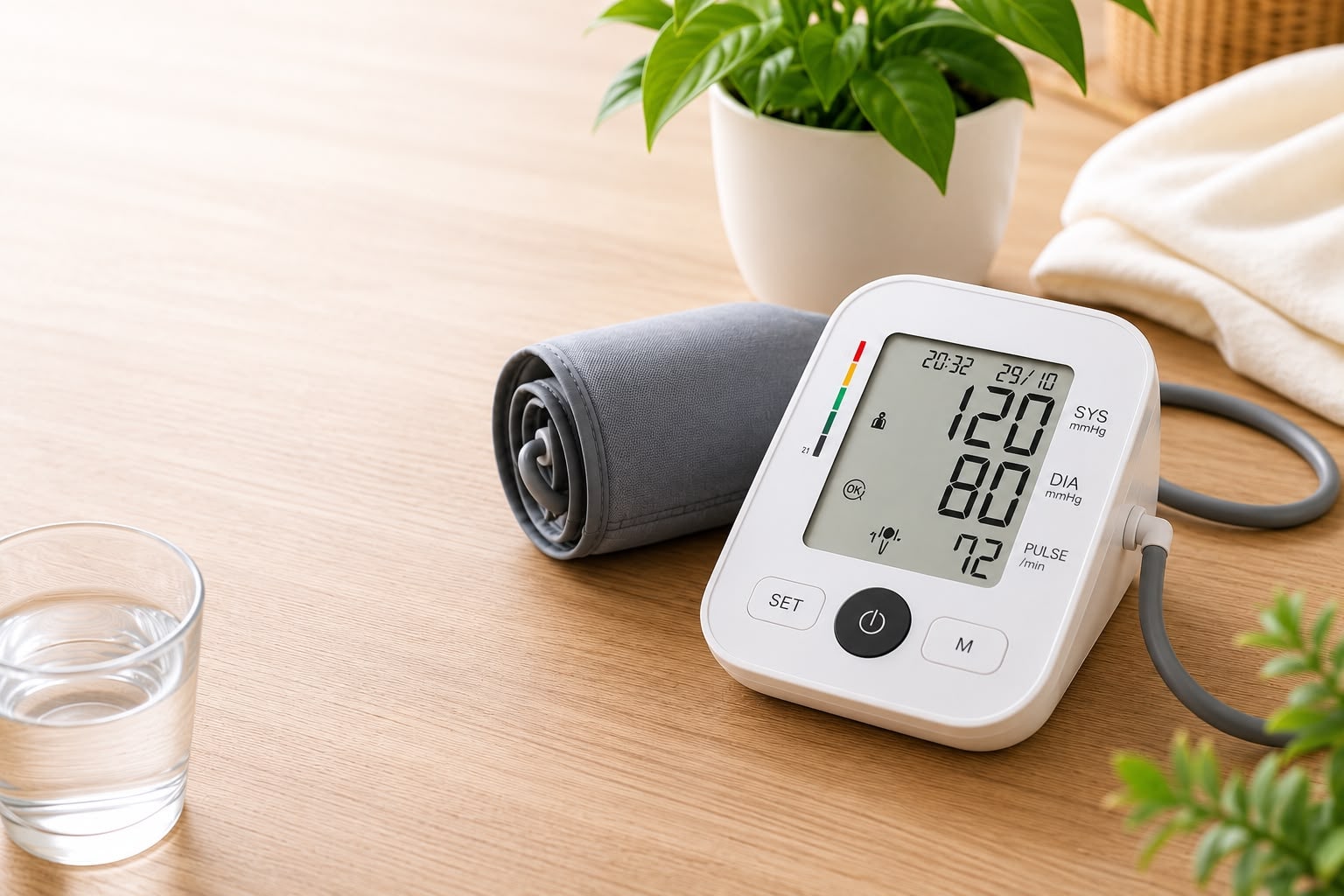
Your blood pressure reading is only useful if you measure it correctly.
Checking your blood pressure at home can help you keep track of your numbers, especially if your healthcare professional has asked you to monitor them.
Before you measure.
Avoid smoking, exercise and caffeinated drinks for about 30 minutes beforehand.
Empty your bladder.
Sit quietly for at least 5 minutes.
Sit with your back supported and feet flat on the floor.
Don’t talk or use your phone while measuring.
Get your position right
Place the cuff around your bare upper arm, just above the elbow.
Rest your arm on a table or other flat surface so that the cuff is approximately at heart level. Make sure you are using the correct cuff size for your arm.
Take more than one reading
Don’t panic over one unusual number.
Take two readings about one minute apart and record both. Keeping a record of your readings can help your healthcare professional identify patterns and make better decisions about your care.
When should you seek help?
If your blood pressure is 180/120 mmHg or higher, wait a few minutes and measure it again.
If it remains that high, contact a healthcare professional promptly.
If very high blood pressure occurs together with symptoms such as chest pain, difficulty breathing, weakness, vision changes or difficulty speaking, seek emergency medical care immediately.
Keep track of your numbers
Home monitoring can be useful, but it doesn’t replace professional medical assessment. If you regularly get high readings, speak with a healthcare professional rather than changing or stopping your medicine yourself.
A convenient option for monitoring your blood pressure at home.
View Blood Pressure Monitors from our website
HEALTHFIELD PHARMACY
We care beyond drugs.